


Пожнивні рештки не повинні бути проблемою
Управління пожнивними рештками — це комплекс заходів із рівномірного розподілу та обробки соломи, полови й стерні після збирання врожаю, спрямований на створення найкращих умов для наступної культури.
За правильного управління пожнивні рештки допомагають захистити структуру ґрунту, зберегти вологу, підтримати біологічну активність і довгостроково поліпшити здоров’я ґрунту. Головне — рівномірно розподілити рештки по всій площі поля та належним чином ними управляти, щоб забезпечити дружні сходи й успішне формування посіву.
У поєднанні з правильним налаштуванням комбайна та використанням знарядь для обробітку стерні ефективне управління пожнивними рештками перетворює побічний продукт збирання врожаю на цінний ресурс для поля. Раніше рештки часто вивозили з поля або заробляли в ґрунт за допомогою інтенсивного обробітку. Однак зі зростанням уваги аграріїв до здоров’я ґрунту, збереження вологи та зниження витрат на сівбу пожнивні рештки дедалі частіше розглядають як цінний ресурс, здатний забезпечити господарству значні довгострокові переваги.
Більшість аграріїв бачили наслідки нерівномірного розподілу пожнивних решток. Валки соломи, скупчення полови та щільні шари рослинного матеріалу можуть призвести до нерівномірних сходів, ускладнити сівбу та спричинити неоднорідний розвиток посіву. У багатьох випадках проблеми з пожнивними рештками починаються ще під час збирання врожаю.
Правильне управління пожнивними рештками значно підвищує ефективність прямої сівби.
Успішне управління рештками починається з ефективного подрібнення та рівномірного розподілу соломи й полови за комбайном. Після цього такі знаряддя, як штригельна борона Claydon і TerraStar, допомагають ще рівномірніше розподілити рештки, поліпшити їх контакт із ґрунтом і створити оптимальні умови для сівби. Мета полягає не в тому, щоб прибрати пожнивні рештки, а в тому, щоб змусити їх працювати на користь вашого господарства та ґрунту.


Понад 20 років інновацій

Сімейна компанія. Вироблено у Великій Британії

Зв’яжіться з нами, щоб отримати комерційну пропозицію
Що кажуть наші фермери
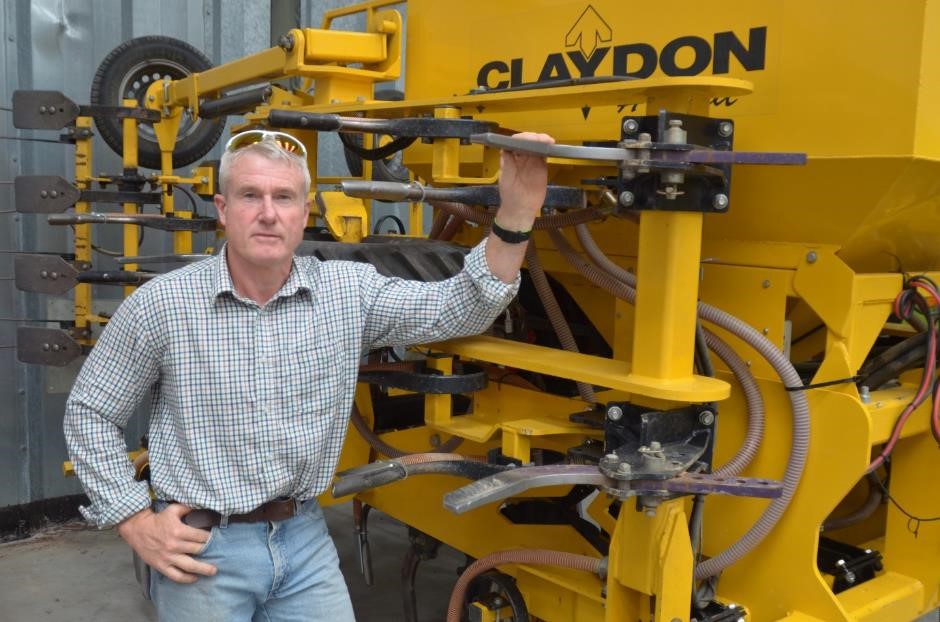

Наш асортимент знарядь для управління пожнивними рештками
Правильне управління пожнивними рештками є запорукою успішного формування посіву. Сівалки Claydon ефективно працюють у технологіях зі збереженням решток на поверхні поля, створюючи чисту зону висіву та водночас зберігаючи цінний захисний покрив у міжряддях.

Причіпні та навісні штригельні борони
Штригельна борона призначена для рівномірнішого розподілу соломи та полови по всій площі поля. Вона допомагає усунути скупчення пожнивних решток і поліпшити їх контакт із ґрунтом.
Обробляючи лише поверхню, борона сприяє розкладанню решток і проростанню падалиці, не порушуючи цінної структури ґрунту нижче.
Ідеально підходить для:
- розбивання валків соломи
- рівномірного розподілу полови
- прискорення розкладання пожнивних решток
- стимулювання проростання падалиці
- економічного управління рештками з мінімальним порушенням ґрунту

TERRASTAR ЛЕГКИЙ КУЛЬТИВАТОР
За великої кількості пожнивних решток або коли потрібне додаткове перемішування ґрунту TerraStar забезпечує мілкий обробіток, що допомагає створити рівномірніші умови для формування посіву.
Працюючи на невеликій глибині, TerraStar поліпшує контакт пожнивних решток із ґрунтом, стимулює проростання падалиці та допомагає усунути поверхневе ущільнення, спричинене проходами збиральної техніки.
Ідеально підходить для:
- полів із великою кількістю пожнивних решток
- заробляння гною у ґрунт
- зменшення ерозії ґрунту
- швидшого прогрівання ґрунту навесні
Основні поради
Усе починається з комбайна
Успішне управління пожнивними рештками починається з рівномірного розподілу соломи та полови комбайном.
- Переконайтеся, що протирізальні ножі введені в роботу.
- Переконайтеся, що паси та приводи подрібнювача правильно відрегульовані й належним чином обслуговуються.
Забезпечте максимальний контакт насіння з ґрунтом
Пожнивні рештки, які щільно контактують із поверхнею ґрунту, ефективніше розкладаються завдяки діяльності мікроорганізмів.
- Створіть умови для природного розкладання пожнивних решток.
- Біологічна активність ґрунту, волога й температура виконають основну роботу.
Захистіть поверхню ґрунту
Залишайте пожнивні рештки на полі, щоб зменшити ерозію, поліпшити вбирання води та зберегти вологу.
- Зберігайте життєво важливу ґрунтову вологу.
- Створіть рівномірний захисний «панцир» на поверхні ґрунту.
Уникайте скупчення пожнивних решток
Валки соломи та її скупчення на розворотних смугах призводять до нерівномірних сходів і ускладнюють сівбу.
- Сівалка працюватиме ефективніше.
- Зменшується ризик пошкодження посівів слимаками, оскільки осередки скупчення їхніх яєць розсіюються та висихають.
Як застосовувати це в полі?
Заїхавши в поле, розкладіть агрегат і виберіть місце для початку роботи. Визначте правильний напрямок руху: працюйте під кутом до напрямку проходів комбайна, а не обов’язково до напрямку сівби.
Водночас врахуйте, яка операція виконуватиметься після боронування. Якщо наступною працюватиме сівалка, заздалегідь продумайте напрямок сівби. Для максимального вирівнювання поверхні та найвищої продуктивності сійте під кутом до напрямку проходів пружинної борони. Однак уникайте великої кількості коротких гонів сівалкою.
Рекомендована робоча швидкість — 15–20 км/год. Під час розворотів на розворотній смузі не підіймайте пружинну борону: залишайте її на ґрунті в робочому положенні, щоб на краях поля не утворювалися великі скупчення пожнивних решток.
Починайте розворот щонайменше за одну ширину захвату пружинної борони до краю поля, щоб не затягувати насіння злакових бур’янів із країв на оброблювану частину поля.
Боронування пружинною бороною на фермі Claydon
Наша 15-метрова причіпна пружинна борона легко та швидко готує стерню до прямого посіву на фермі в графстві Саффолк. Витрачаючи лише 1–2 л пального на гектар і обробляючи понад 30 га за годину, ми можемо підготувати стерню з мінімальними витратами.
FAQs

Пружинна борона Claydon і TerraStar відіграють важливу роль в ефективному управлінні пожнивними рештками, проте вони призначені для виконання різних завдань.
Пружинна борона підготовлює поверхню ґрунту, а не обробляє його. Працюючи з мінімальним порушенням ґрунту, вона рівномірно розподіляє солому та полову по полю, усуває скупчення пожнивних решток і стимулює проростання падалиці та злакових бур’янів. Завдяки тісному контакту решток із поверхнею ґрунту волога, температура та біологічна активність ґрунту запускають процес їх природного розкладання. Це ідеальний агрегат для першого проходу відразу після комбайна.
TerraStar найкраще проявляє себе в умовах, коли потрібен інтенсивніший вплив на ґрунт. Мілкий обробіток забезпечує додаткові агрономічні переваги, не погіршуючи захисту ґрунту. Обробляючи лише верхній шар, TerraStar забезпечує достатній контакт ґрунту з пожнивними рештками для прискорення їх розкладання, водночас зберігаючи на поверхні захисний покрив.
Зірочки, що обертаються, створюють по всьому полю неглибокі заглиблення. Вони роблять поверхню нерівнішою, уповільнюють поверхневий стік води та сприяють її проникненню в ґрунт. Це допомагає зменшити ерозію й поверхневий стік, залишаючи поверхню поля достатньо щільною та придатною для руху техніки.
20 к. с. (15 кВт) на кожен метр робочої ширини.
Якщо погода дозволяє збирати врожай комбайном — можна працювати й пружинною бороною!
Стільки разів, скільки потрібно! Оскільки ця операція потребує мінімальних витрат, практично жодних обмежень немає. Пружинну борону можна використовувати до або після обробітку ґрунту, щоб вирівняти поверхню та сформувати дрібногрудкувату структуру.
Пружинна борона Claydon створює дрібногрудкувату структуру у верхньому шарі ґрунту завглибшки до 30 мм. Збережена в ґрунті волога сприяє швидкому та рівномірному проростанню бур’янів. Борона також руйнує місця відкладання яєць слимаками, виносячи яйця на поверхню, де під дією сонячного світла вони висихають. Пожнивні рештки на поверхні або поблизу неї стимулюють активність дощових черв’яків і допомагають підтримувати природну рівновагу ґрунтової екосистеми.
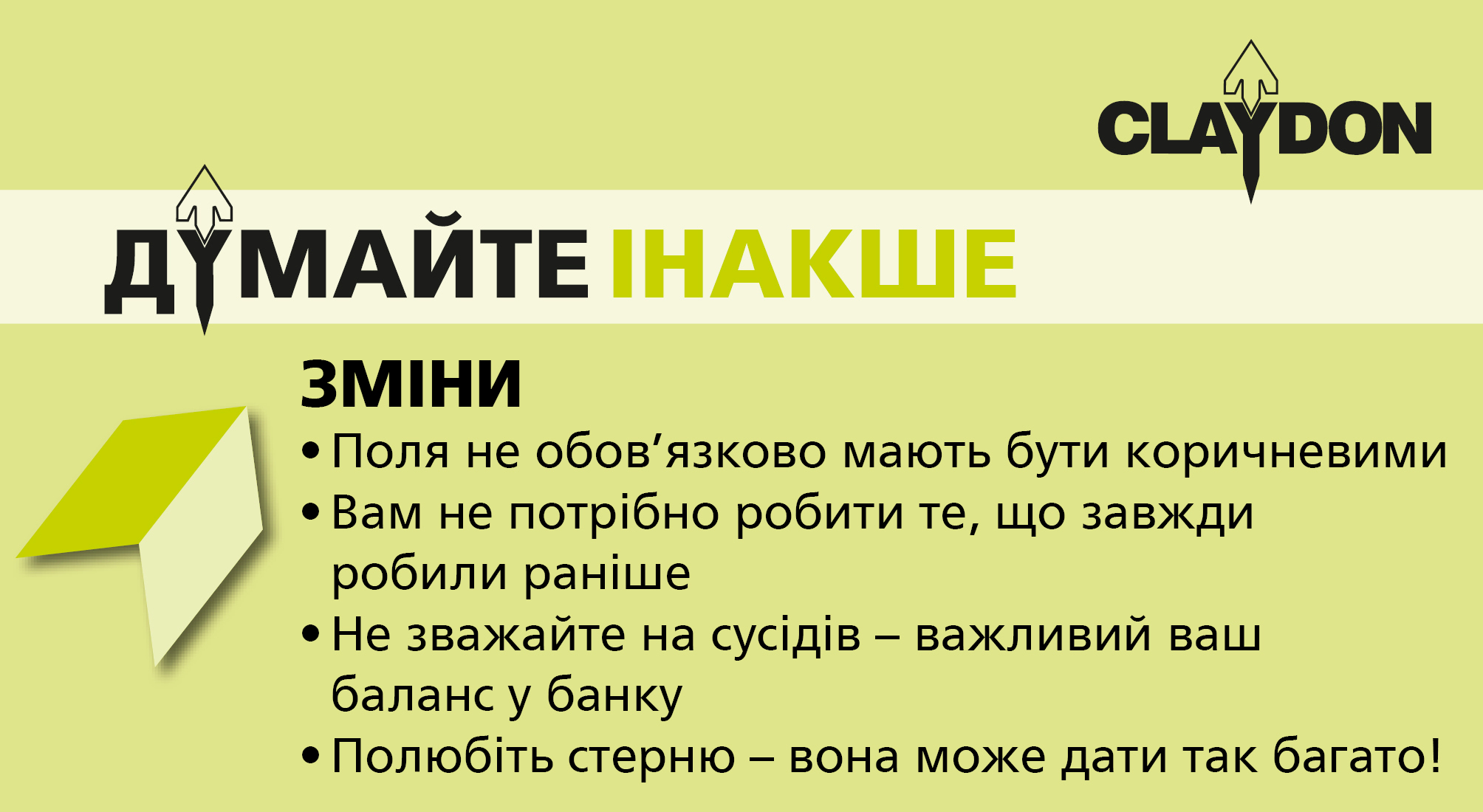
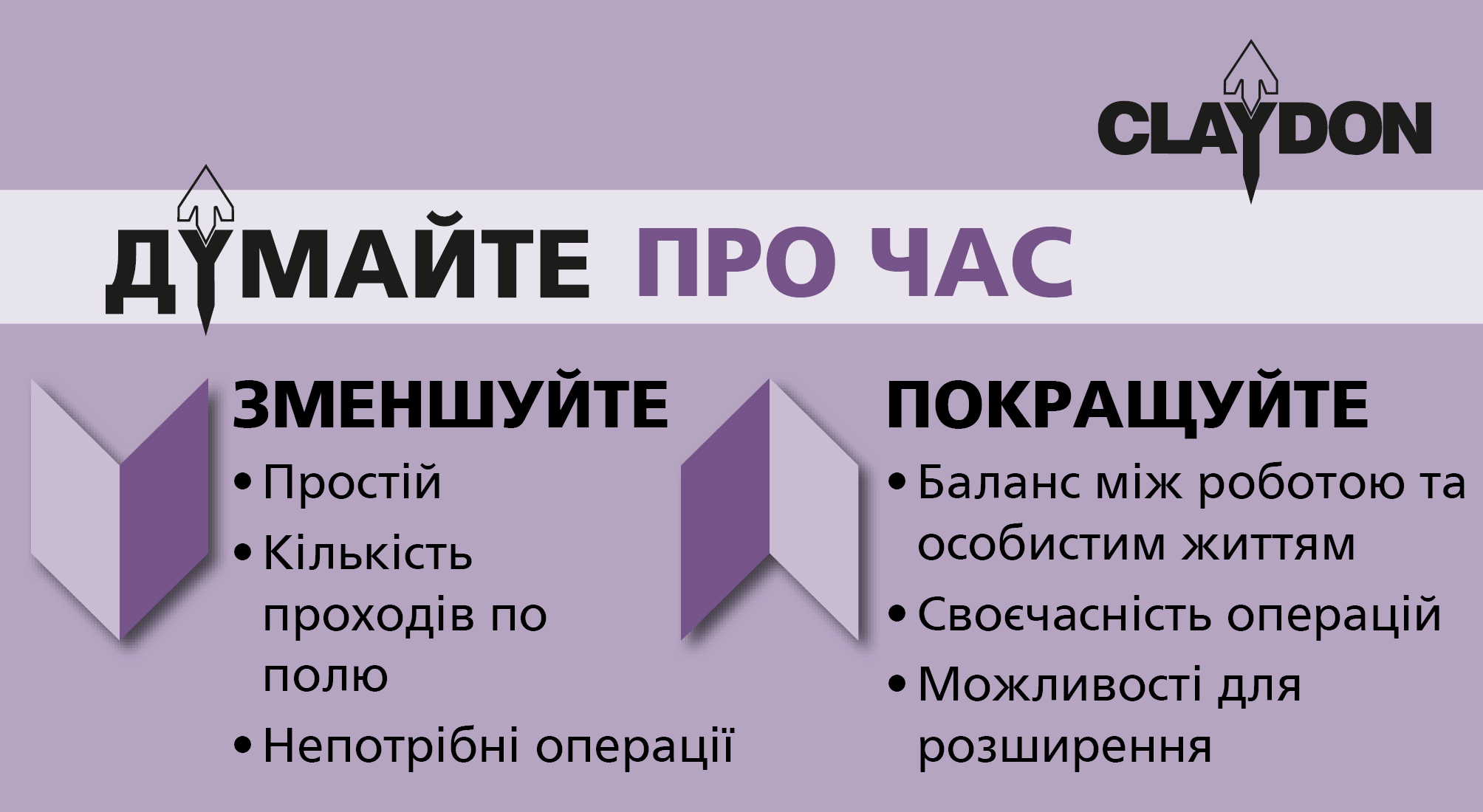
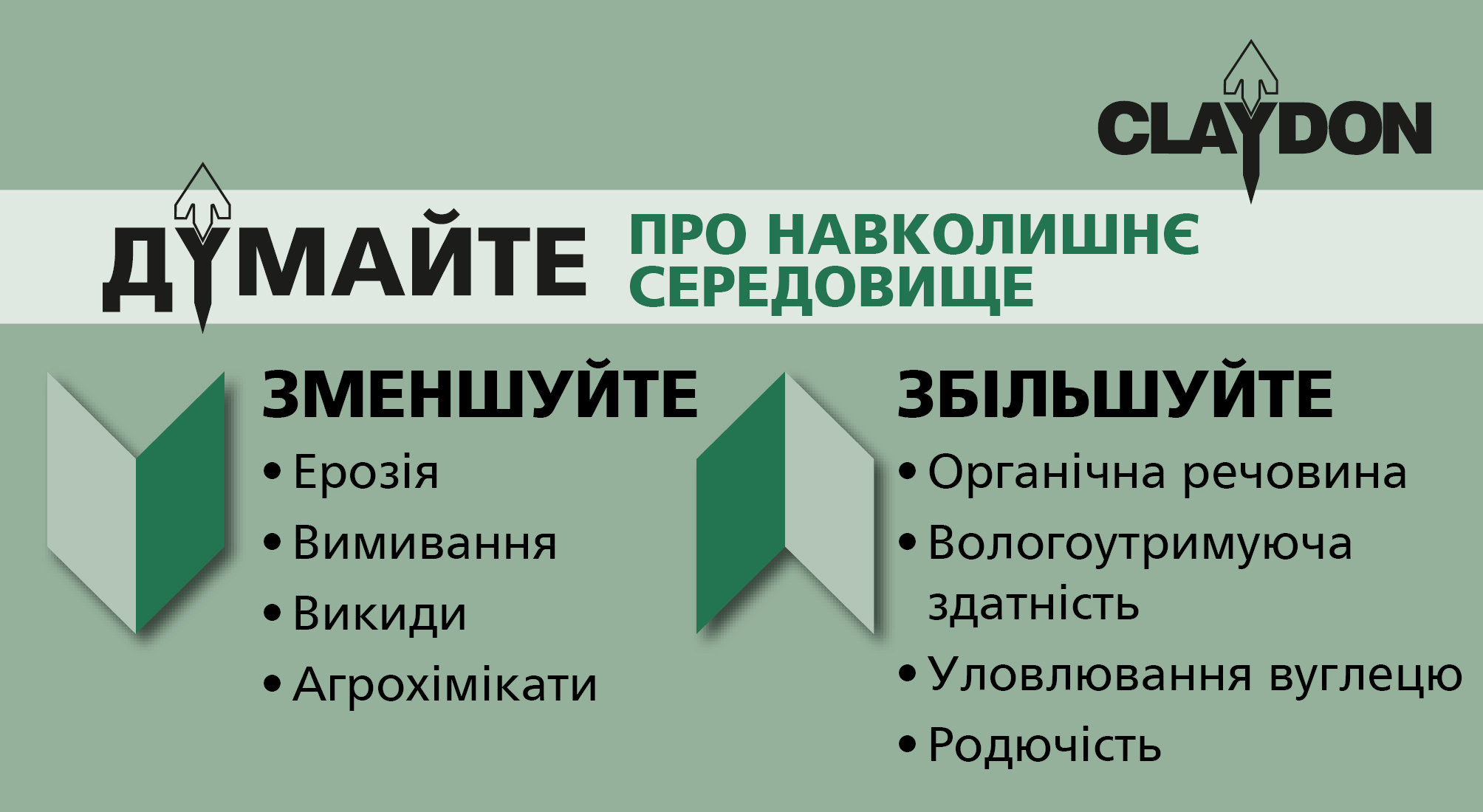
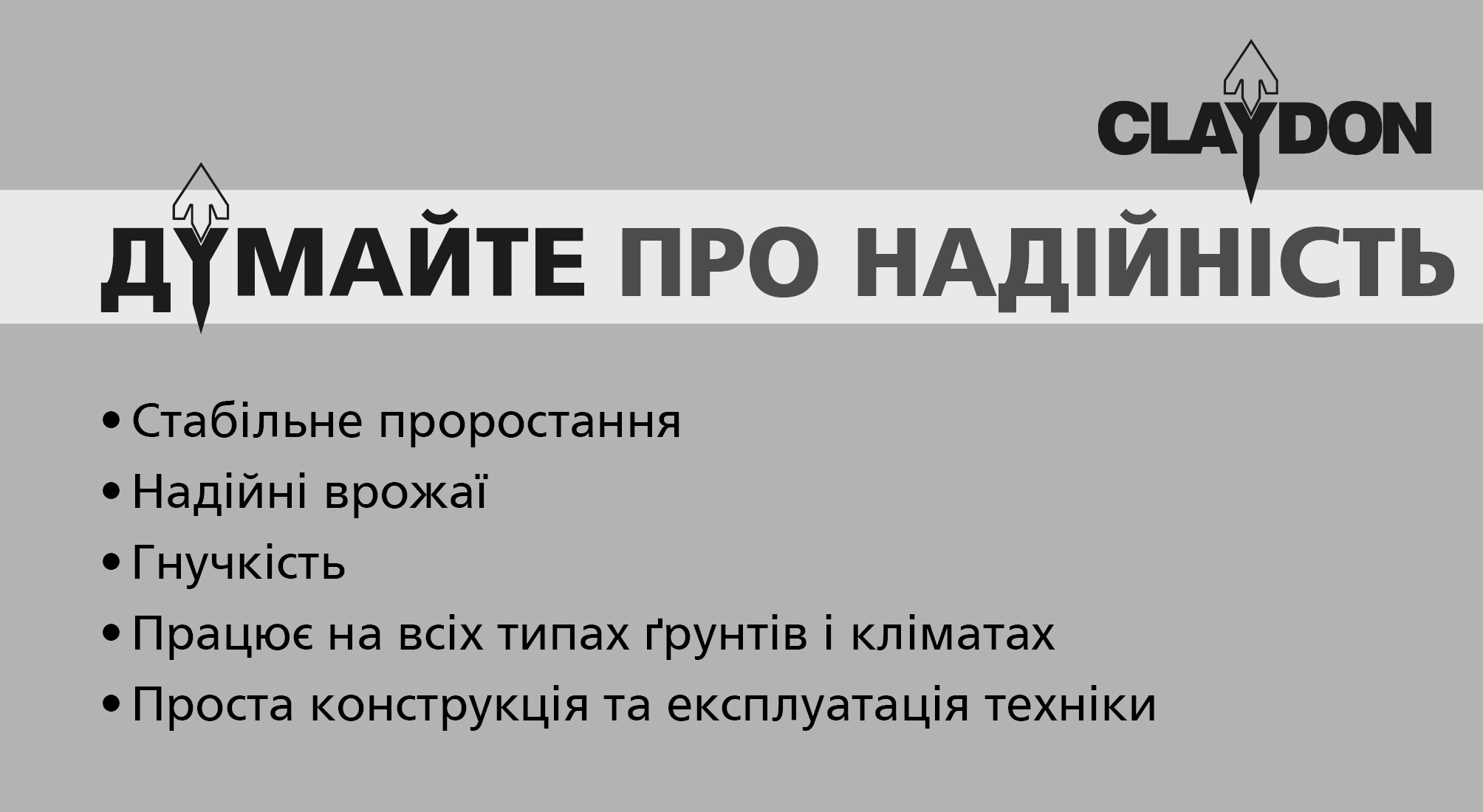
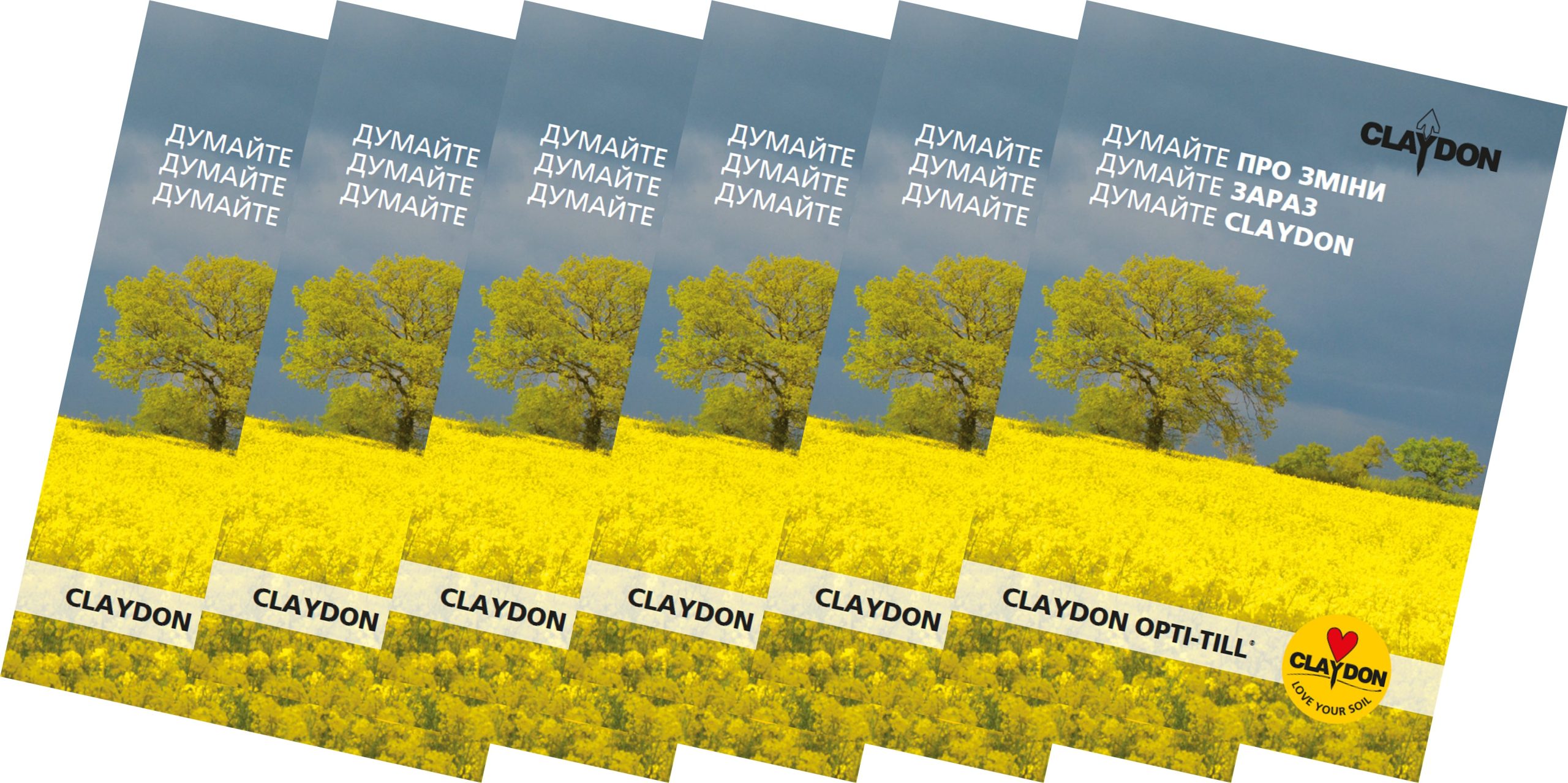
ДУМАЙТЕ ПРО ЗМІНИ
Складні часи вимагають розумніших рішень. Думайте про зміни разом із Claydon.
Щоб безкоштовно отримати електронний примірник нашої брошури THINK, підпишіться на наші оновлення електронною поштою, надіславши листа на адресу marketing@claydondrill.com.

Зв’яжіться з нами
Потрібна допомога? Просто напишіть нам — ми завжди на зв’язку.
Помилка: Contact form не знайдена.
СИСТЕМА ПОСІВУ CLAYDON
ЯК ВОНА ПРАЦЮЄ
Як навісні сівалки Evolution M, так і причіпні сівалки Hybrid T працюють за одним основним принципом, але розраховані на господарства різних масштабів і різні виробничі завдання.
Навісна сівалка Evolution M
- Краще підходить для малих і середніх господарств, де важливі маневреність і нижчі початкові витрати.
- Навісна конструкція робить агрегат компактним і маневреним на невеликих полях або полях неправильної форми.
- Місткість бункера становить приблизно 2500–2700 л, що забезпечує високу продуктивність без надмірного збільшення маси агрегату.


Hybrid T — причіпна сівалка
- Розроблена для великих рослинницьких господарств і робіт, що потребують високої продуктивності.
- Бункер місткістю приблизно 5000–5500 л скорочує простої на дозаправлення під час роботи на великих площах.
- У причіпній конструкції вага бункера припадає на транспортні колеса, що забезпечує стабільну глибину висіву в міру його спорожнення.


Про нас
Фермерська родина, яка прагне створювати кращу сільськогосподарську техніку.
Родина Клейдон обробляє важкі глинисті ґрунти графства Саффолк із початку XX століття. Джеффрі та Френк Клейдони — третє покоління родини, яке працює на тих самих полях під назвою E.T. Claydon and Sons. Вони й сьогодні продовжують господарювати на цій землі.
У 1981 році родина розпочала виробництво техніки, випустивши Claydon Yield-o-Meter — новаторську систему контролю врожайності. Саме цей дух інновацій привів до розроблення системи посіву Opti-Till.
Сьогодні численні господарства у Великій Британії та за її межами використовують нашу техніку, щоб економити час, скорочувати витрати та зберігати здоров’я ґрунту.
Контактна інформація
info@claydondrill.com
Phone
+44 (0)1440 820327
Visitors and deliveries
Claydon Drills/ Claydon Yield-o-Meter Ltd
Bunters Road
Wickhambrook
Newmarket
Suffolk, CB8 8XY